
Cabinet Refinishing vs Replacing: The Complete San Diego Homeowner's Guide
One of the most common questions we hear from San Diego homeowners is whether to refinish their existing cabinets or replace them entirely. The answer depends on your budget, timeline, the condition of your boxes, and how dramatically you want to change the look of your kitchen. This guide covers everything you need to make the right call — and avoid the most expensive mistakes.
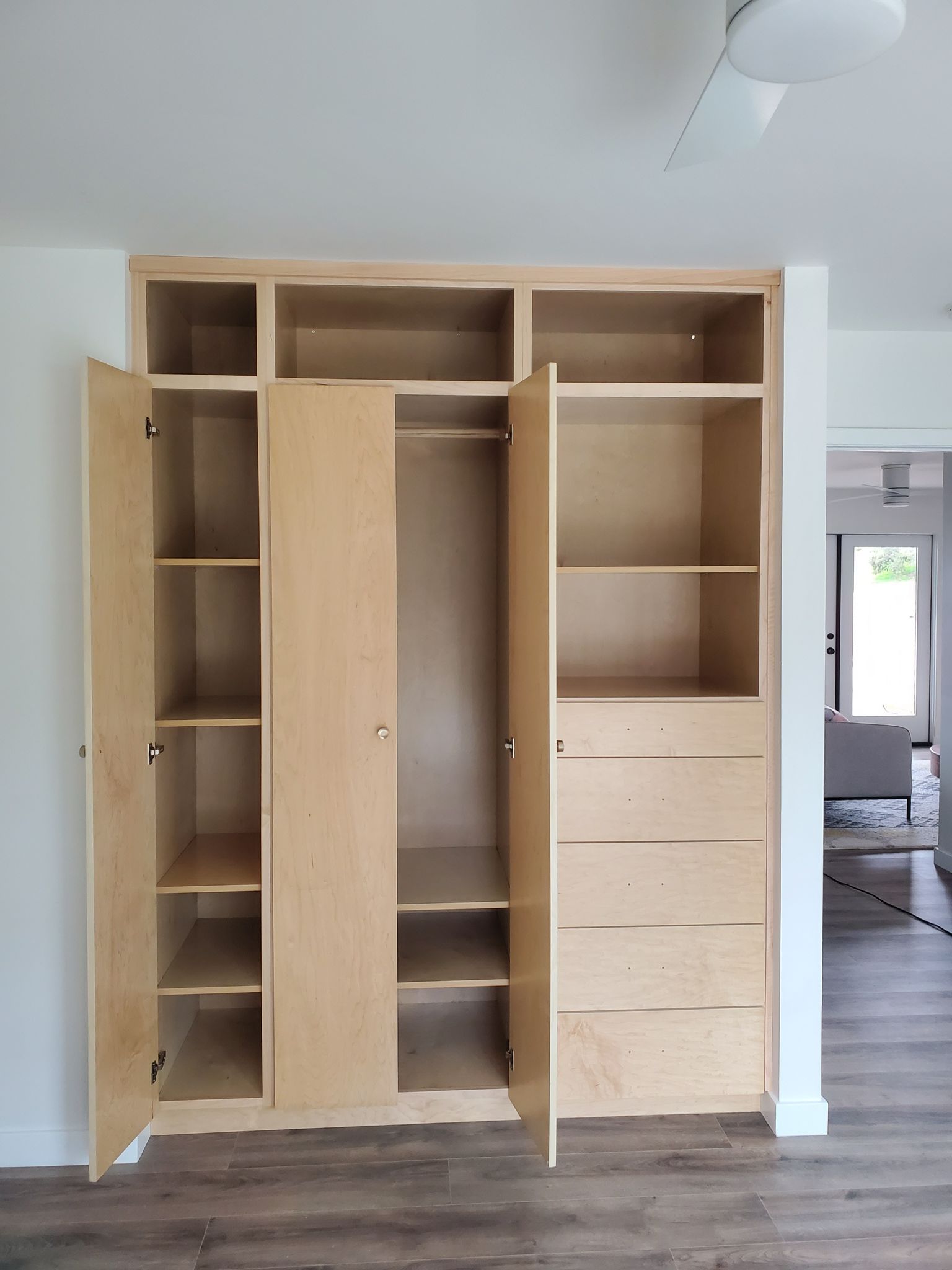
What Exactly Is Cabinet Refinishing?
Cabinet refinishing — sometimes called cabinet painting or cabinet restoration — refers to the process of changing the surface appearance of your existing cabinet doors and frames without replacing the underlying box structure. The cabinet boxes stay in place. The doors, drawer fronts, and frames get stripped, prepped, primed, and sprayed with a new finish.
A professional refinishing job done correctly is nearly indistinguishable from factory-painted new cabinetry. The key word is professionally done. A brush-and-roll repaint by a general painter will look exactly like that — painted. A proper cabinet refinishing job uses catalyzed lacquer or conversion varnish applied with HVLP spray equipment in a controlled environment, producing a hard, durable, glass-smooth finish that holds up to daily kitchen use.
Refinishing is distinct from refacing, which involves keeping the box but replacing the doors and drawer fronts with new ones, and wrapping the exposed cabinet frames in a veneer or laminate. Refacing is a middle-ground option that costs more than refinishing but less than full replacement.
What Cabinet Replacement Actually Involves
A full cabinet replacement means demolishing and removing every existing cabinet in the kitchen, disposing of the old material, and installing entirely new cabinetry — new boxes, new doors, new drawer systems, new hardware. It also typically involves patching drywall after demo, potentially moving plumbing or electrical runs, and in many cases replacing the countertops because the new cabinets may sit at different heights or have a slightly different layout.
Replacement gives you the most flexibility: new interior storage systems, soft-close drawer boxes, pull-out organizers, new door profiles, and an entirely fresh layout if desired. It also adds the most to the project cost and timeline.
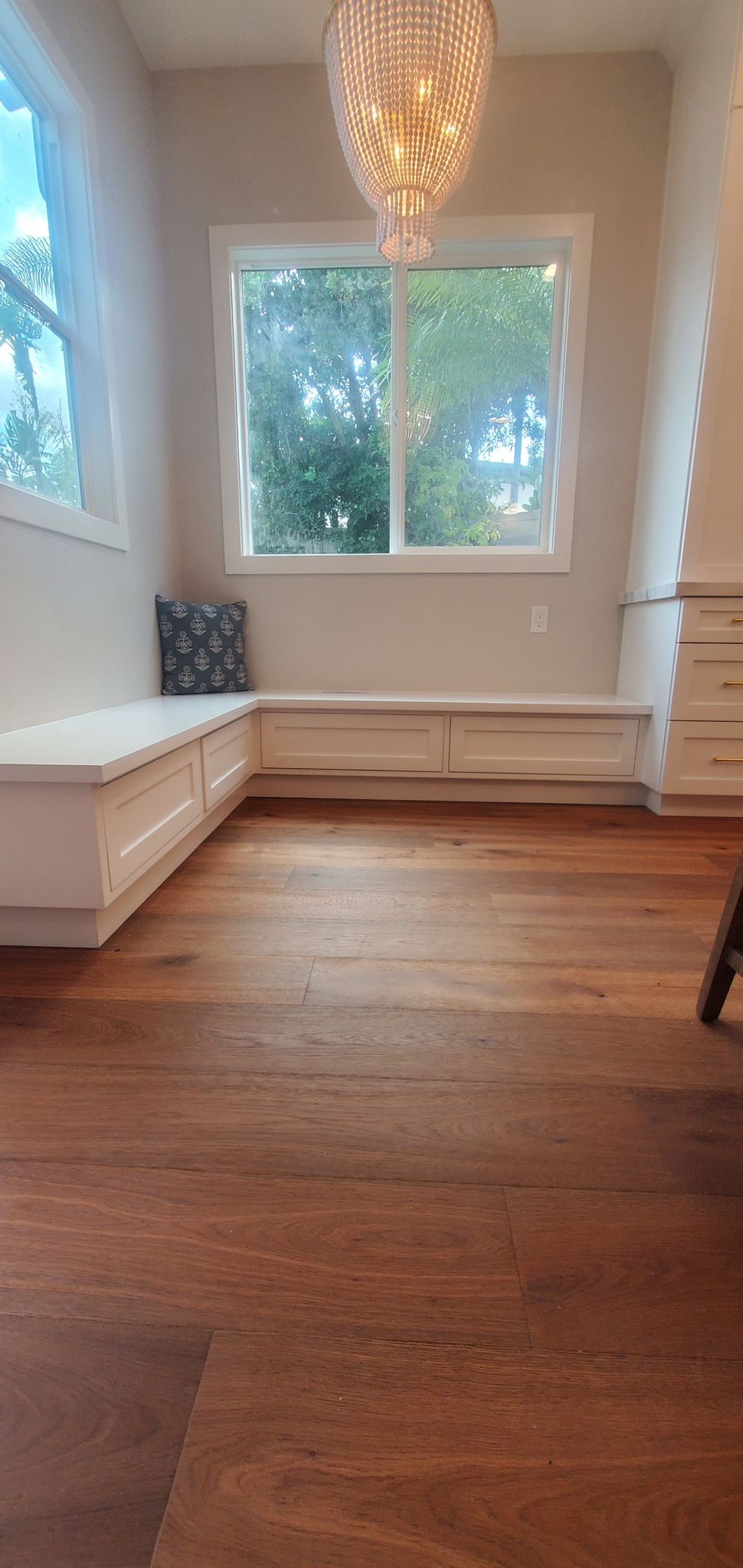
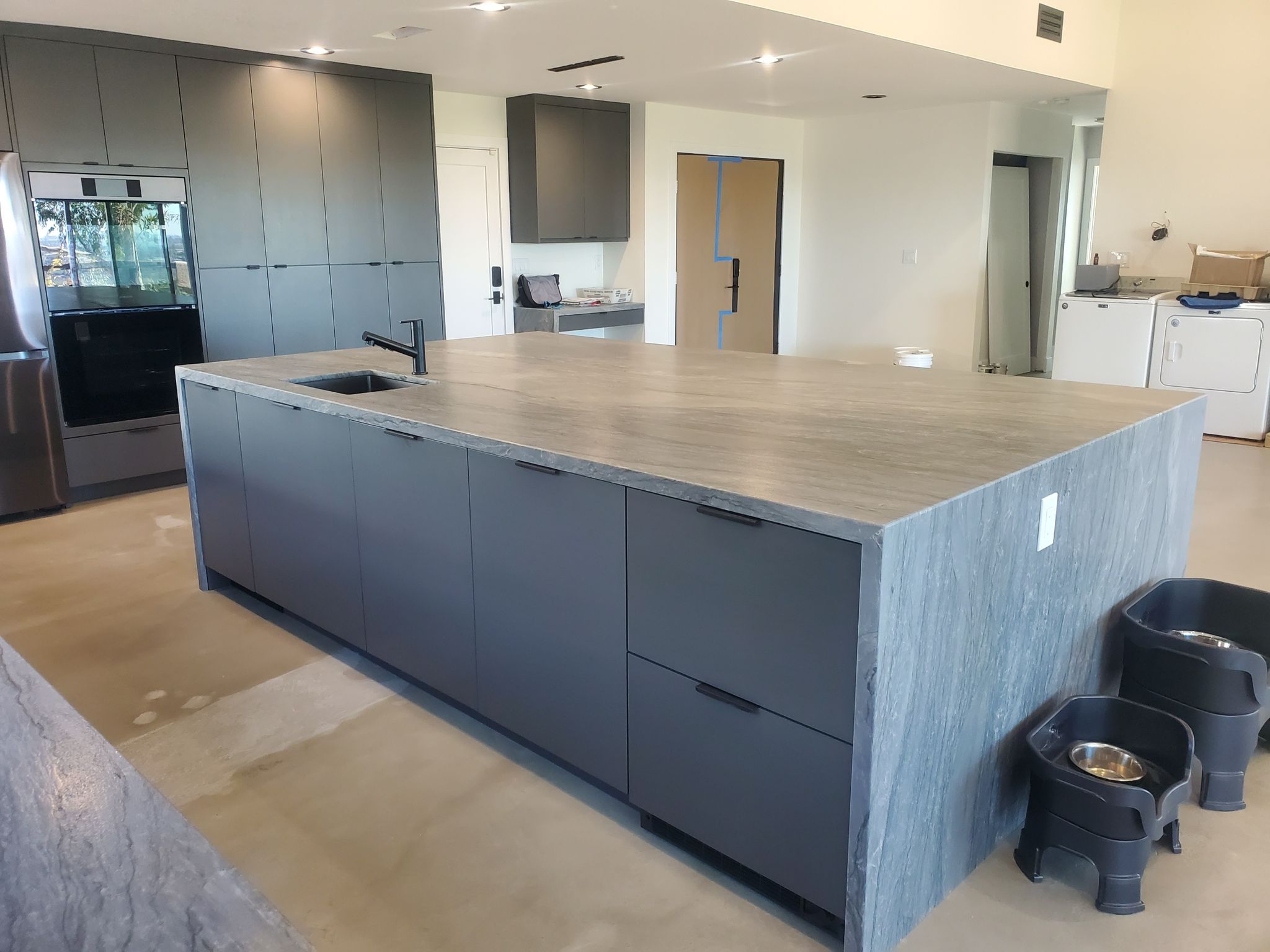
Cabinet refinishing projects by SD Remodel Experts in San Diego — before and after results using professional spray-applied finishes.
Cost Comparison: Refinishing vs Replacing in San Diego
Cost is usually the first factor homeowners weigh, and there's a significant gap between the two options in the San Diego market.
Cabinet Refinishing Costs
For a typical San Diego kitchen with 20–25 cabinet doors and drawers, professional refinishing runs between $1,800 and $4,500 depending on the size of the kitchen, the condition of the existing surfaces, the paint or finish product used, and whether you want a two-tone look (two separate colors require additional masking and setup time).
This price range typically includes: thorough cleaning and degreasing, light sanding or chemical stripping if needed, wood filler repairs on minor dings and chips, high-build primer coat, finish coats in your chosen color, and reassembly. Most quality contractors will remove the doors and spray them in a shop or controlled environment for the best results — on-site work is generally a compromise.
Cabinet Replacement Costs
A full cabinet replacement in a San Diego kitchen typically runs from $15,000 to $50,000+ depending on the size of the kitchen, the grade of cabinetry selected (stock vs. semi-custom vs. fully custom), and whether the project involves any layout changes or structural work.
Stock cabinets from big-box stores at the low end of the range can bring your material cost down, but installation, countertop removal and replacement, and any drywall or electrical work add up fast. Semi-custom cabinetry — the most popular choice for San Diego renovation projects — typically lands in the $25,000–$40,000 range for a full kitchen, all-in.
Quick Cost Summary
| Option | Typical Range (San Diego) | Timeline |
|---|---|---|
| Refinishing / Painting | $1,800 – $4,500 | 3–5 days |
| Refacing | $5,000 – $12,000 | 1–2 weeks |
| Full Replacement | $15,000 – $50,000+ | 4–8 weeks |
When Refinishing Is the Right Choice
Refinishing makes excellent sense in several specific scenarios. If most or all of the following apply to your situation, refinishing is likely your best path forward:
1. Your Cabinet Boxes Are Structurally Sound
The most important factor. If the boxes themselves — the carcass that sits against the wall — are made of solid plywood or quality particleboard, are square and level, aren't showing signs of water damage, delamination, or soft spots, and the interior is in decent shape, the boxes have plenty of life left in them. Refinishing the exterior is a highly logical upgrade.
Open every cabinet and drawer. Look for swelling at the bottom of base cabinets (a sign of past water leaks), delaminating veneer inside, warped drawer boxes, or drawers that no longer slide properly. If the interiors are solid, you're a great refinishing candidate.
2. You're Happy With the Layout
If your current kitchen layout works for how you cook and live — the sink is in the right place, you have enough storage, the island or peninsula works for your workflow — then there's no functional reason to replace the entire cabinet system. A color and finish refresh will transform the look without disrupting what already works.
3. You Want a Fast Turnaround
Refinishing a kitchen takes 3–5 working days, and you're typically only displaced from your kitchen for 1–2 of those days while the finish cures. A full replacement can take 4–8 weeks from cabinet delivery to final installation, meaning weeks of a non-functional kitchen. For families with young children or households that rely heavily on home-cooked meals, that's a serious quality-of-life factor.
4. You Want to Update the Color or Finish
If your existing cabinets are a dated honey oak, a worn cherry stain, or a builder-grade beige that no longer reflects your taste, refinishing to a crisp white, warm greige, charcoal, or soft sage can dramatically modernize the kitchen — at a fraction of the cost of replacement. Color is often the single biggest visual driver in a kitchen transformation, and refinishing delivers that result efficiently.
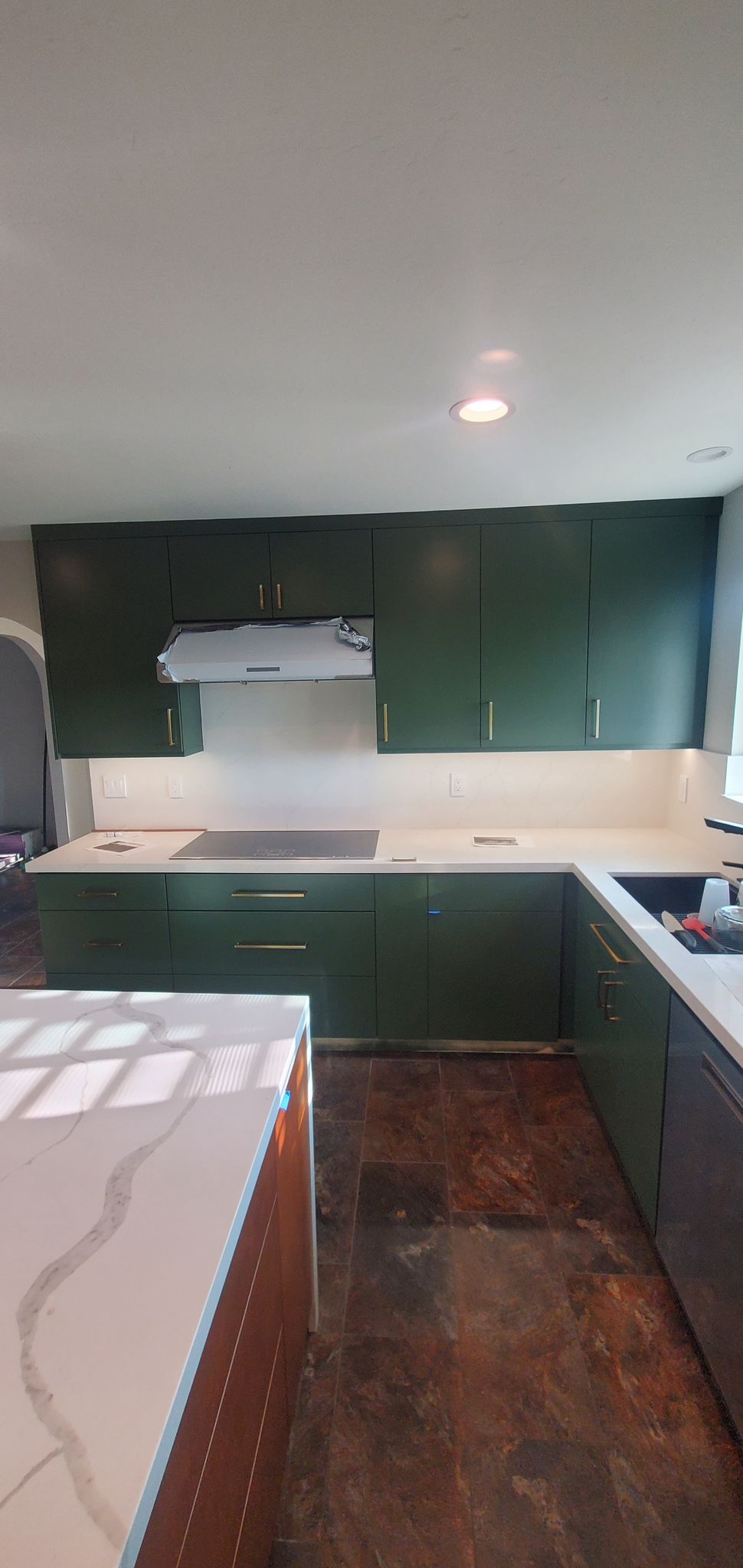
A color change through professional refinishing can completely redefine the character of a kitchen without the cost or disruption of full replacement.
5. You're Preparing to Sell
If you're planning to sell your home in the next 1–3 years and the kitchen looks dated, cabinet refinishing is one of the highest-ROI investments you can make. For $2,500–$4,000 you can take a tired kitchen from "stale and dated" to "bright and move-in ready" — a transformation that often yields $10,000–$20,000+ in perceived value during a sale. Full replacement rarely pencils out when you're selling; you're building value for the next owner, not yourself.
When Replacement Is the Right Choice
There are clear situations where refinishing simply doesn't solve the underlying problem, and replacement is the better long-term investment:
1. The Boxes Are Damaged or Failing
Water damage is the most common culprit. If the base cabinet under the sink has a soft, swollen bottom, if cabinet boxes have delaminating faces, or if the structural integrity of the plywood or particleboard is compromised — no amount of refinishing will fix that. Painting over rotting or failing boxes is a short-term patch that will need to be addressed again in a few years anyway.
2. You Need a Different Layout
If you want to open up the kitchen, move the sink, add an island where one didn't exist, convert a peninsula to a full island, add a coffee station, or fundamentally change how the space is organized — refinishing can't help you. Layout changes require new cabinetry.
3. You Want Modern Storage Features
Older cabinets often lack the interior hardware that makes modern kitchens functional: soft-close drawer boxes, pull-out trash cabinets, deep drawer organizers for pots and pans, spice pull-outs, tray dividers, or lazy Susan replacements. If storage functionality is your primary pain point, refinishing the exterior won't address it. You'd need to invest in retrofitted hardware (possible, but limited by the existing box dimensions) or replace the cabinets with purpose-built storage solutions.
4. The Door Style Is Non-Negotiable
Refinishing changes color and finish but not door profile. If you have raised-panel oak doors and want flat-panel shaker doors, you have two options: reface (replace doors on existing boxes) or full replacement. Refinishing alone won't change the physical shape of the door.
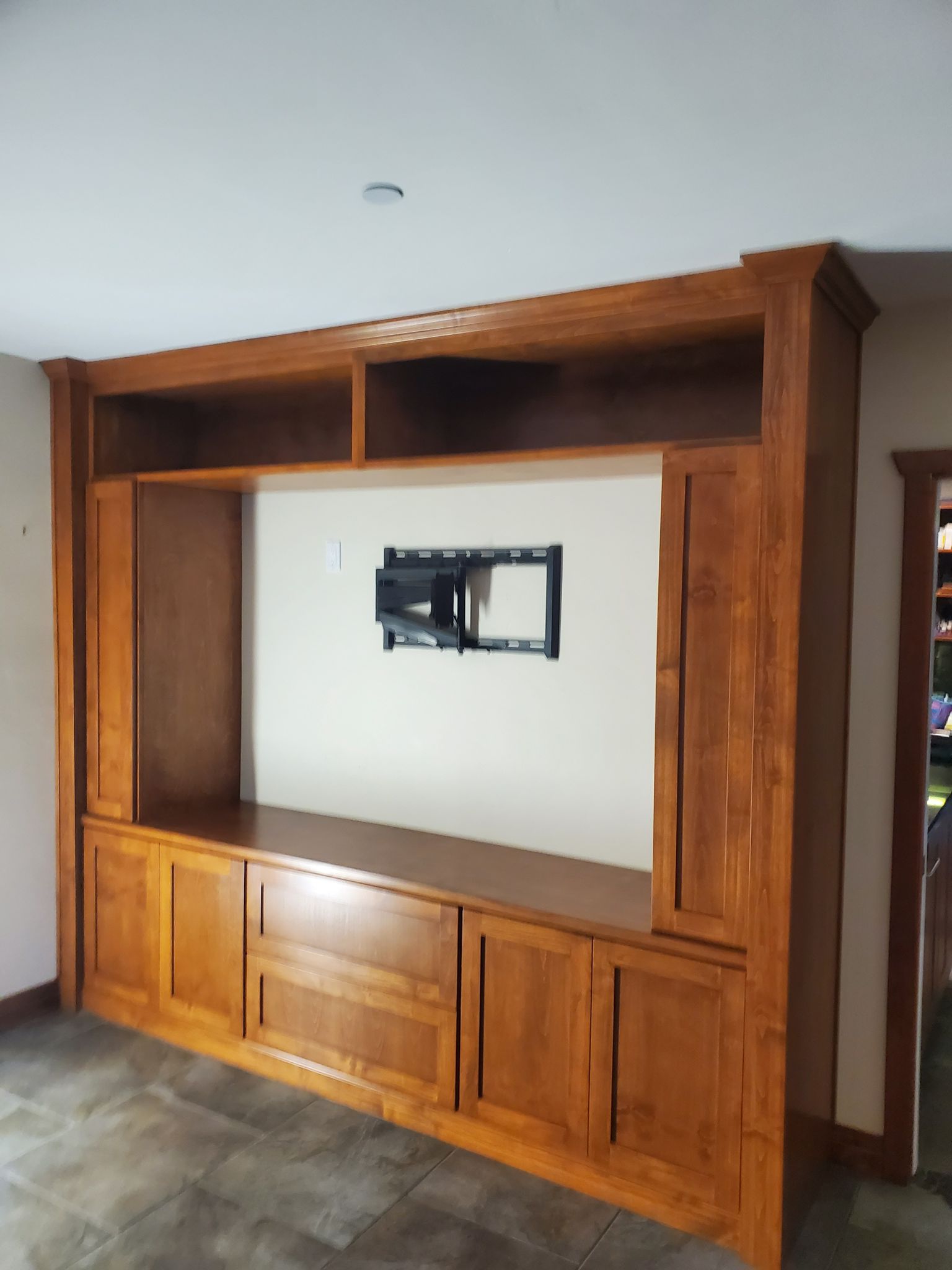
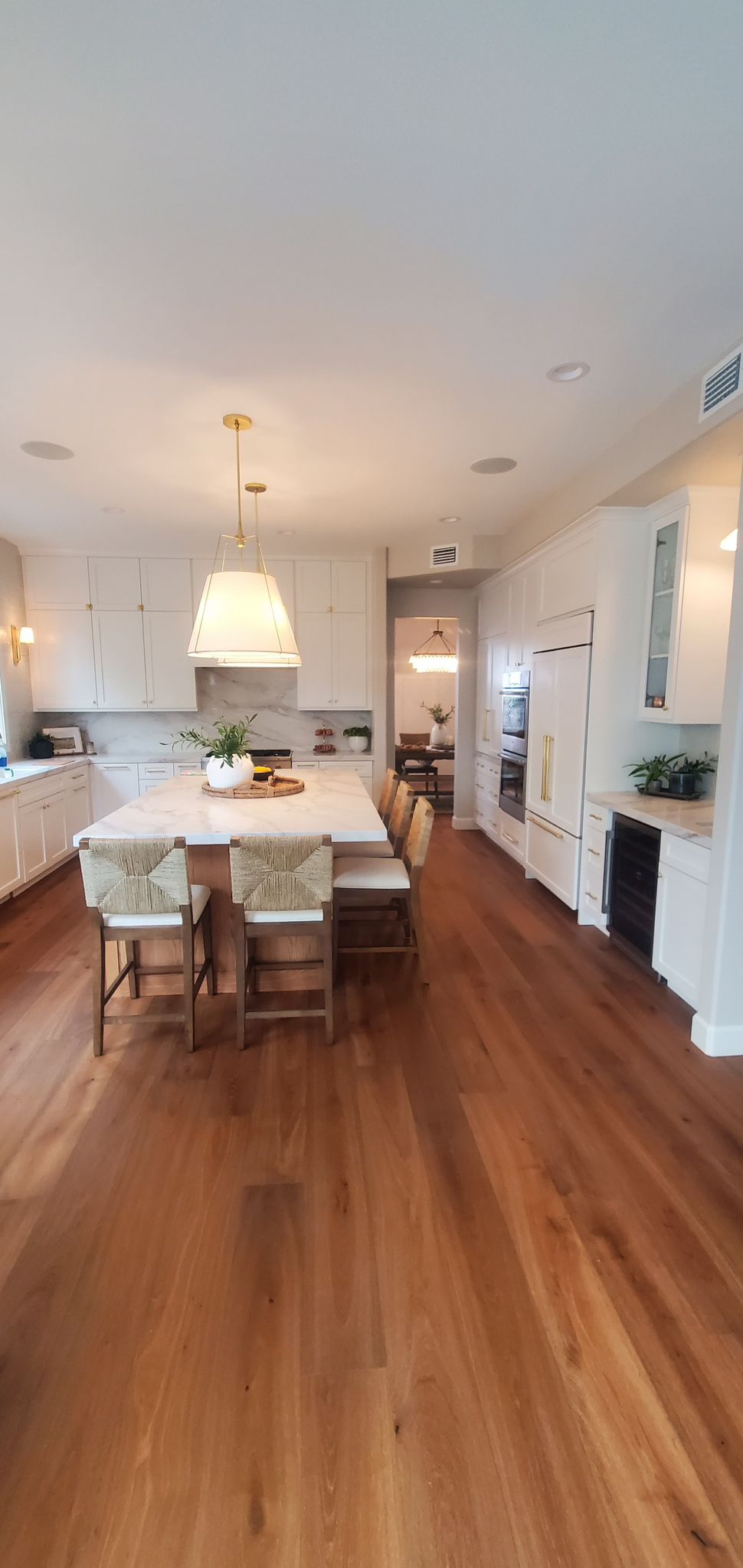
When replacement is the right call, full custom or semi-custom cabinetry allows you to design storage, proportions, and finishes from scratch.
The Refinishing Process: What to Expect
Understanding exactly what a professional refinishing job entails helps you evaluate contractor proposals and set realistic expectations for the result.
Step 1: Assessment and Color Selection
A quality contractor will assess the condition of your existing cabinets before committing to a price. They'll check for veneer delamination, chipping, water staining, previous paint layers, and the substrate material (solid wood, MDF, plywood, laminate). Certain substrates — particularly thermofoil or melamine — are more challenging to refinish and may require different adhesion primers or not be good candidates at all.
Color selection happens at this stage. Most professional cabinet painters work with Benjamin Moore Advance, Sherwin-Williams Emerald Urethane, or catalyzed conversion varnish systems. Each has different application requirements, cure times, and finish characteristics. Conversion varnish is generally considered the most durable but requires a licensed contractor with proper equipment.
Step 2: Prep and Removal
All doors and drawer fronts are removed and labeled for reinstallation in the correct position. Hardware is removed. The face frames — the structural wood border on each cabinet opening that stays attached to the wall — are masked and prepped in place. All hardware holes are addressed, and any damaged areas are filled with wood filler and sanded smooth.
Thorough degreasing is essential, especially in kitchens. Years of cooking grease, airborne oils, and cleaning product residue create a film that will cause paint adhesion failure if not fully removed. A contractor who rushes this step will produce a finish that peels within a year.
Step 3: Priming
A high-build primer seals the substrate and creates a uniform base for the topcoat. On stained wood, a stain-blocking primer prevents tannin bleed-through, which can cause yellowing or browning through a light-colored topcoat. Sanding between coats ensures a smooth, level surface.
Step 4: Spray Application
Doors should be removed to a shop or a controlled spray area for the topcoat. Spraying in place on the wall is possible but introduces dust contamination and overspray concerns that are difficult to fully control. High-quality shops spray doors flat, applying multiple thin coats with full dry time between each.
The face frames are typically sprayed in place with the kitchen thoroughly protected. Two to three topcoats are standard for a durable, professional result.
Step 5: Cure and Reinstallation
Most professional finish products require 24–72 hours of cure time before they're ready for reinstallation and daily use. Doors are rehung, hardware is reinstalled, and adjustments are made to ensure everything aligns properly. A thorough walkthrough with the homeowner closes out the project.
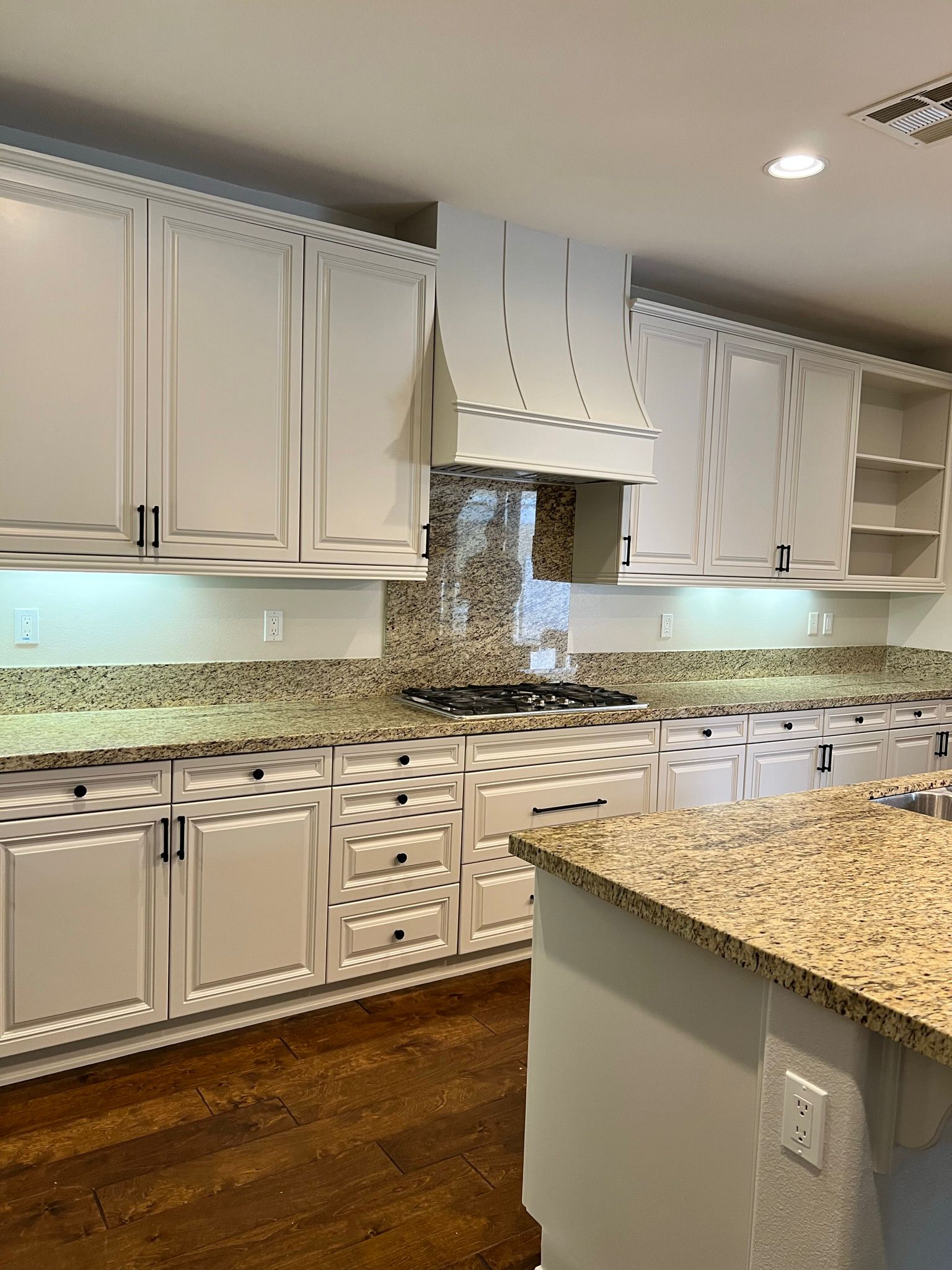
Cabinet refinishing project in Carmel Valley, San Diego — existing oak boxes transformed with a clean, factory-quality white finish by SD Remodel Experts.
How to Evaluate a Cabinet Refinishing Contractor
The quality gap between a skilled cabinet finisher and a general painter doing cabinets on the side is enormous. Here's what to look for when vetting a contractor:
- Portfolio of completed cabinet projects — not just painted walls or trim work. Cabinet refinishing is a specialized skill.
- They remove doors for off-site spraying — this is a reliable indicator of quality. On-site spray-in-place work is a compromise.
- They can explain their paint or finish system — conversion varnish, catalyzed lacquer, Benjamin Moore Advance, Sherwin-Williams Emerald Urethane. They should be able to tell you what they're using and why.
- They address prep in detail — a contractor who rushes past prep in the estimate conversation is likely to rush past it on the job.
- They provide a warranty — reputable refinishers typically offer 1–3 year warranties on their work. If they don't stand behind it, that says something.
- References in San Diego — local references allow you to see finished work in person and ask about the experience. The San Diego climate (humidity near the coast, heat inland) can stress finishes differently, so experience here matters.
Common Refinishing Mistakes to Avoid
Choosing the Wrong Finish Color in Isolation
Cabinet color looks different under kitchen lighting than it does on a paint chip or screen. Always test samples in your actual kitchen with your actual countertops, backsplash, flooring, and lighting before committing. Many homeowners choose a color they loved on a sample and are surprised when it reads warmer or cooler in the space.
Skimping on Surface Prep
This is where most refinishing failures originate. Paint applied over inadequately cleaned, degreased, or primed surfaces will peel, chip, or crack within months of daily use. The prep work is what separates a $2,500 job that lasts 10 years from a $1,000 job that needs to be redone in 18 months.
Not Upgrading the Hardware Simultaneously
New hardware is a fraction of the total cost and makes a significant visual difference. If you're going to the trouble of refinishing the cabinets, replace the pulls and knobs at the same time. New hardware paired with a new finish color is the combination that makes a kitchen feel genuinely transformed rather than just painted.
Assuming Any Painted Cabinet Can Be Refinished
Thermofoil cabinets — the type with a heat-bonded vinyl wrap over MDF — are poor refinishing candidates. The thermofoil is prone to peeling at edges even before you paint over it, and paint adhesion is challenging without the proper primer system. If you have thermofoil, get an honest assessment from a contractor about whether refinishing or replacing makes more sense.
San Diego-Specific Considerations
The San Diego climate creates some specific conditions worth accounting for in a cabinet refinishing project:
Coastal humidity: Homes within a few miles of the coast in La Jolla, Del Mar, Point Loma, and Coronado experience consistent marine layer humidity, especially in the mornings. This affects dry times and can impact adhesion if finish is applied in high-humidity conditions. Quality contractors account for this in their scheduling and product selection — water-based finishes that off-gas slowly in humid conditions are better applied on dry inland-blown days.
Heat in inland neighborhoods: Areas like Carmel Valley, Rancho Santa Fe, and Escondido experience significantly higher temperatures in summer. Heat can accelerate cure times but also cause certain finishes to skin over before they've properly leveled. Again, experienced local contractors know how to adjust their process for conditions.
Sun exposure: Kitchens with significant south- or west-facing windows get substantial UV exposure in San Diego. Very light colors like pure white can yellow slightly over time if the finish doesn't include UV inhibitors. Many professional finish products are formulated with UV resistance — ask your contractor about this specifically.
The Bottom Line: Making the Decision
The decision framework is relatively straightforward once you've assessed the actual condition of your cabinet boxes:
If the boxes are solid and you like the layout → refinishing is almost always the right move. You'll spend a fraction of the cost of replacement, be done in under a week, and get a dramatically fresher kitchen.
If the boxes are solid but you want to change the door style → refacing is worth evaluating. You keep the existing boxes, get new doors and drawer fronts in any profile you want, and the existing layout stays intact.
If the boxes are failing, the layout needs to change, or you want a fully custom storage system → replacement is the right investment. Done well, it adds meaningful value to your home and can be designed exactly around how you actually use your kitchen.
The most important thing is to get an honest assessment from a professional who will tell you which option actually makes sense for your situation — not the most expensive option, and not the cheapest one. The right answer depends on what you're starting with and what outcome you're trying to achieve.
Get an Honest Assessment from SD Remodel Experts
We'll evaluate your existing cabinets, walk you through refinishing and replacement options with real pricing, and recommend the approach that makes the most sense for your specific kitchen and budget. No pressure, no upselling — just a straightforward conversation about your best path forward.
Schedule a Free Consultation