Textured Wall Finishes and Techniques for San Diego Homes
From orange peel to Venetian plaster — a contractor's guide to wall texture in San Diego
Wall texture is one of the most overlooked — and most commonly mismatched — elements in San Diego remodels. Whether you're opening up walls, adding rooms, or doing a full gut remodel, the texture on your new drywall needs to match the existing texture in the rest of your home. Do it wrong and the remodel shows. Do it right and the new work disappears into the existing space.
Beyond matching existing texture, many homeowners in San Diego are choosing to upgrade their wall finishes as part of a remodel — moving from orange peel to a smooth Level 5 finish, or adding Venetian plaster or limewash to create an entirely different feel. Here's a complete breakdown of the most common textured wall finishes you'll encounter in San Diego homes.
1. Orange Peel Texture
Orange peel is by far the most common wall texture in San Diego residential construction from the 1970s through the 2000s. It gets its name from its appearance: a light, rounded, dimpled surface that resembles the skin of an orange. The texture is subtle — noticeable up close but not visually dominant from a distance.
Application: Applied with a hopper spray gun or, in a pinch, a textured roller. The spray gun approach produces the most consistent results. The material is a water-based drywall mud mixed to a thin consistency and sprayed onto the wall in overlapping passes.
Best for: Living rooms, bedrooms, hallways, and any space where a neutral, low-maintenance texture is preferred. It's common on ceilings throughout San Diego tract homes.
Matching orange peel during remodels is one of the most common drywall challenges. The key variables — spray distance, air pressure, material viscosity, and nozzle size — all affect the final appearance. Experienced applicators practice on cardboard first to dial in the match before applying to the wall.
2. Skip Trowel Texture
Skip trowel is a hand-applied texture characterized by irregular, slightly raised plaster patches against a smooth background. It's distinctly different from orange peel — more artisan, more intentional, and more varied in appearance. Each section is unique.
Application: Applied by hand using a hawk and trowel, skip trowel is a labor-intensive process. The applicator dips a rounded trowel into joint compound or plaster, applies patches to the wall in random patterns, and skips the trowel across the surface to create the characteristic flat, uneven patches. The background shows through between patches.
Where you'll find it: Skip trowel is common in Mediterranean and Spanish Revival architecture, which is prevalent throughout coastal San Diego — Coronado, Mission Hills, La Jolla, and Rancho Santa Fe. It's also used as a design choice in contemporary remodels where homeowners want a more artisan texture than standard spray finishes provide.
Cost consideration: Skip trowel is significantly more labor-intensive than spray textures and requires skilled plasterers. Expect to pay a premium over standard orange peel or knockdown work.
3. Knockdown Texture
Knockdown texture is similar in principle to skip trowel but produced with a spray gun rather than by hand. The name describes the process: texture is sprayed onto the wall, then "knocked down" (flattened) by dragging a wide drywall knife across the surface while still wet.
The result is a flatter, less pronounced texture than skip trowel — irregular patterns with soft edges and slight elevation variation across the surface. Knockdown became standard in San Diego new construction throughout the 1990s and 2000s.
Practical advantage: Knockdown texture does an excellent job of hiding minor wall imperfections — small cracks, slight bulges, and uneven taping — which made it popular with production builders.
Matching knockdown requires getting the spray pattern right before applying, then timing the knockdown pass correctly. Too soon and the texture smears flat; too late and it won't knock down smoothly. This is one of the most frequently botched patch repairs in remodeling.
4. Smooth Finish (Level 5)
A Level 5 smooth finish is the highest-quality drywall finish available — and the most labor-intensive. It involves skim-coating the entire drywall surface with thin layers of joint compound, then block-sanding between coats to produce a perfectly flat, texture-free surface.
Level 5 is not the same as regular painted drywall. Standard new drywall (after taping and two coats of mud) is a Level 3 or Level 4 finish. At those levels, minor surface texture from the tape and mud is still visible under raking light. A Level 5 skim coat eliminates that entirely.
Why it matters: High-gloss and semi-gloss paints amplify every surface imperfection. If you're planning to use high-gloss paint on walls or a dark saturated color in a room with directional lighting, a Level 5 finish is necessary to achieve a clean result.
Where we use it: Level 5 smooth finish is very popular in La Jolla and Rancho Santa Fe remodels, where contemporary design sensibility calls for perfectly flat walls that read as architectural surfaces rather than construction.
5. Venetian Plaster
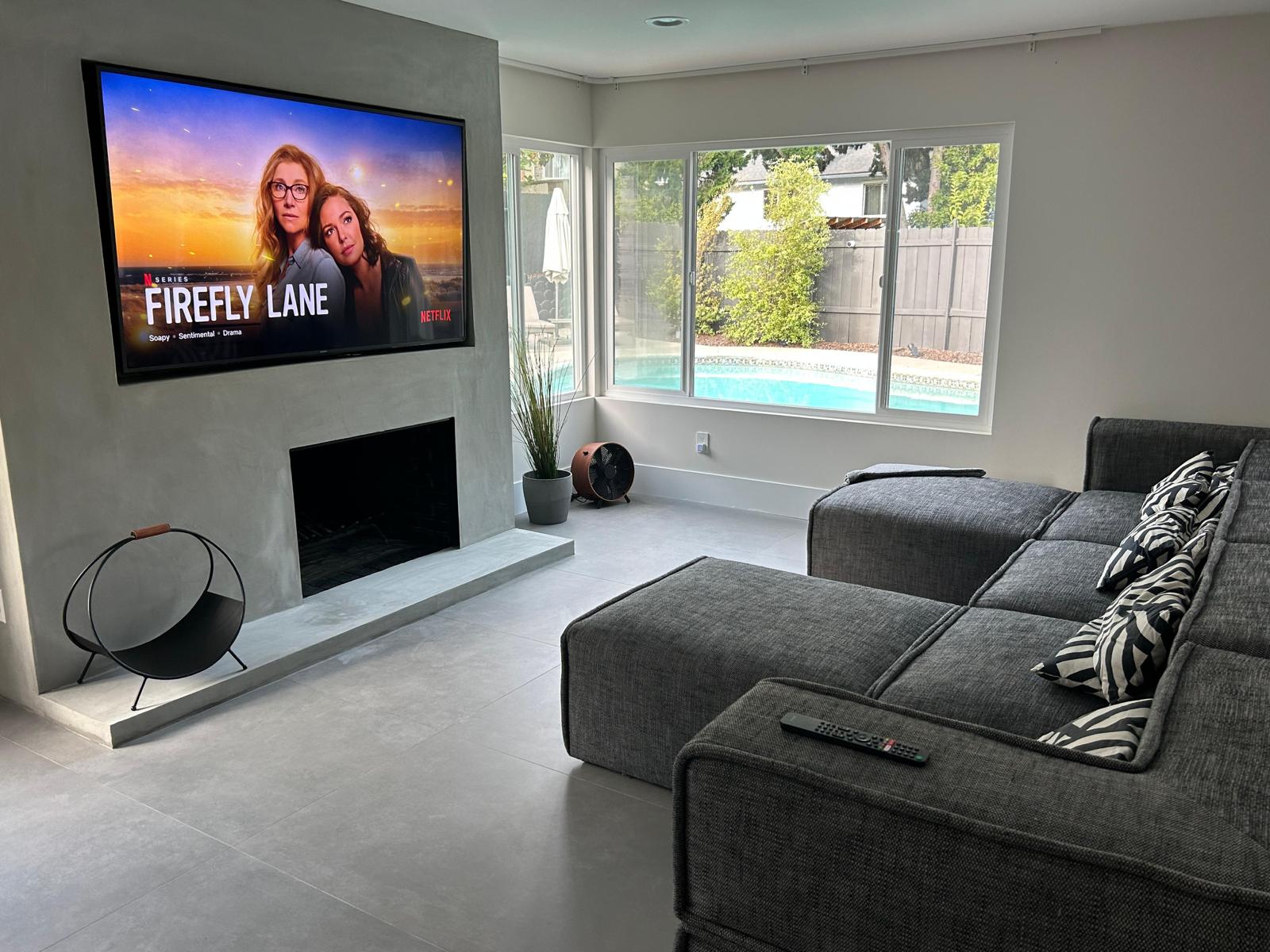
Venetian plaster is a multi-layer plaster finish made from marble dust, slaked lime, and pigment. Applied in three to five thin coats with a steel trowel and burnished between coats, it produces a high-sheen, luminous surface that reads as stone from a distance but reveals depth and variation up close.
Application process: Each coat is applied very thin — almost transparent — then allowed to cure partially before the next coat is applied in the opposite direction. The final coat is burnished with a clean steel trowel until the surface takes on its characteristic sheen. The process is time-consuming and requires experience.
Best applications: Accent walls, entry features, dining rooms, and luxury master bath walls. Venetian plaster is not appropriate for high-moisture shower and tub surrounds unless sealed with a dedicated sealer rated for wet environments.
Venetian plaster is one of the specialty finishes we regularly apply as part of full remodels and as standalone decorative finish projects throughout San Diego County.
6. Limewash
Limewash has become one of the fastest-growing wall finish trends in San Diego remodels over the past few years. It produces a matte, layered, Old World appearance that is distinctly different from both standard paint and plaster. See our complete limewash painting technique guide for full application details and product recommendations.
7. How to Match Existing Texture When Patching
In remodeling, the biggest texture challenge is almost never applying a new finish to a clean room — it's matching new drywall patches to existing texture in a room that isn't being fully repainted.
The professional approach:
- Practice spraying on cardboard until the pattern matches the existing wall before touching the actual surface.
- For knockdown: match the texture density and adjust the knockdown timing — the wall you're matching was applied under different conditions than your patch will be.
- Apply a slightly lighter coat than the existing texture and build up rather than over-applying on the first pass.
- Prime patches before texturing to prevent uneven absorption.
- If you can't match the texture well, skim the entire wall or room to create a uniform Level 5 finish — this is sometimes less expensive than a perfect texture match and produces a better result.
Our painting and specialty finishes team handles texture matching throughout San Diego as part of larger kitchen and bathroom remodels, and as standalone drywall finishing work.
Frequently Asked Questions
What wall texture is most common in San Diego homes?
Orange peel and knockdown are the most common textures in San Diego tract homes built between the 1970s and 2010s. Newer construction tends toward smooth (Level 5) or light skip trowel.
Can I apply texture over existing texture?
Sometimes. Skim coating over existing texture to smooth it out is common. Adding texture over existing texture is possible but can result in a heavy, uneven look — especially over orange peel. It depends on the existing condition and the target finish.
How much does professional wall texturing cost?
Texture application in San Diego typically ranges from $1.50 to $4.00 per square foot depending on texture type and existing wall condition. Venetian plaster and specialty finishes are priced higher based on scope.
How long does wall texture take to dry before painting?
Most spray textures dry in 24 hours under normal San Diego conditions. Skip trowel and Venetian plaster may require 48–72 hours between coats.
Discuss Your Texture or Specialty Finish
Considering a textured finish for your San Diego remodel? SD Remodel Experts applies everything from orange peel matching to full Venetian plaster.